
| Element | Content(%) |
|---|---|
| Nb | Remaining |
| Ti | 49-51 |
| O | ≤0.05 |
| N | ≤0.01 |
| C | ≤0.005 |
| Fe | ≤0.01 |
| H | ≤0.002 |
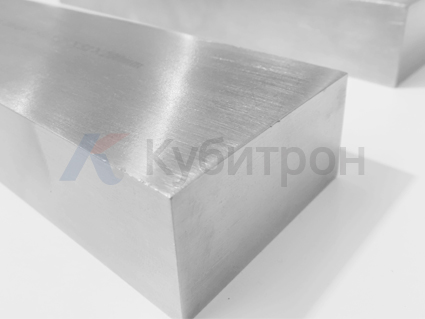
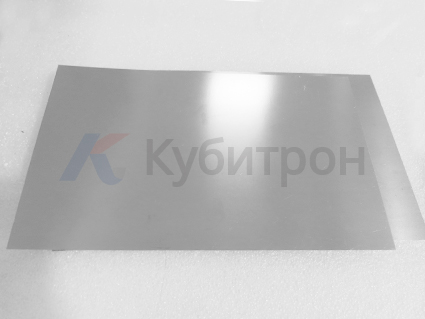
Niobium-50 Titanium alloy—commonly designated as NbTi50—is one of the most widely used superconducting materials today. Its composition can be precisely controlled during the melting process, resulting in a uniform solid-solution structure.
Superconducting properties: The superconducting transition temperature (Tc) is approximately 8–10 K (-265.15 to -263.15°C), requiring operation in a liquid helium (4.2 K) environment. Regarding high-magnetic-field performance, the critical current density (Jc) is ≥10⁵ A/cm² at 4.2 K and 5 T, with a maximum applicable magnetic field of up to 10 T, making it suitable for manufacturing high-field superconducting magnets. Nb50-Ti50 alloy wire is currently the most widely used low-temperature superconducting material, utilized in magnets for MRI systems and particle accelerators.
Through the synergistic effect of niobium and titanium, the Nb50-Ti50 alloy combines high strength, corrosion resistance, biocompatibility, and superconductivity, occupying an irreplaceable position in high-end manufacturing. Its performance can be further enhanced through compositional optimization and process control to meet the requirements of various applications. Its excellent superconductivity makes it suitable for superconductor technology, while its high strength makes it ideal for the aerospace industry.
| Element | Content(%) |
|---|---|
| Nb | Remaining |
| Ti | 49-51 |
| O | ≤0.05 |
| N | ≤0.01 |
| C | ≤0.005 |
| Fe | ≤0.01 |
| H | ≤0.002 |
| Melting point | 1950~2050℃ |
| Thermal conductivity | 15~20 W/(m·K) |
| Проводимость | 2.5~3.0×10⁶S/m |
| Coefficient of thermal expansion/td> | 7.5~8.0×10⁻⁶/K |
| Specific heat capacity | 0.27~0.30 J/(g·K) |