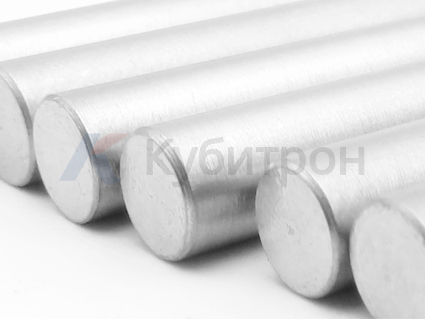
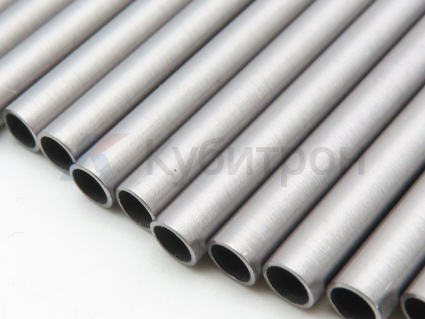
The Nb-1Zr alloy (niobium-1% zirconium) is a niobium-based alloy containing 1% zirconium. It possesses a high melting point—approximately 2410 ± 10°C—allowing it to maintain a relatively stable physical state in high-temperature environments. With a density of approximately 8.57 g/cmsup>3 and a thermal conductivity of 24.2 BTU/(hr)(ft)sup>2(°F/ft) at 25°C, its favorable thermal conductivity offers advantages in applications requiring heat dissipation or heat exchange.
Performance Characteristics:
Mechanical Properties: The addition of zirconium to niobium enhances the alloy's strength without compromising its ductility or workability, resulting in an excellent balance of strength and toughness.
Corrosion Resistance: Zirconium improves the alloy's resistance to oxidation and corrosion by alkali metals, providing good resistance against acids, alkalis, and salts, as well as high-temperature, high-pressure water and steam (300–400°C).
Other Properties: It features a low thermal neutron capture cross-section, strong resistance to liquid metal corrosion, good thermal conductivity, a high melting point, strong electron emission capabilities, and gas-absorbing properties; it is utilized in the nuclear energy and high-pressure sodium lamp industries.
By precisely controlling the chemical composition, the Nb-1Zr alloy achieves an optimal balance of strength, corrosion resistance, and workability, meeting the rigorous demands of various fields.