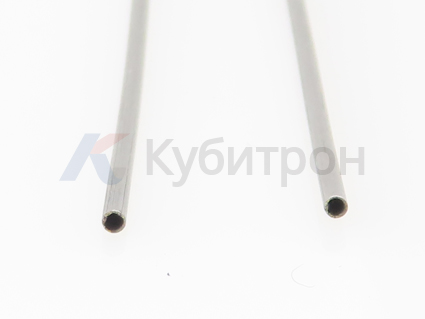
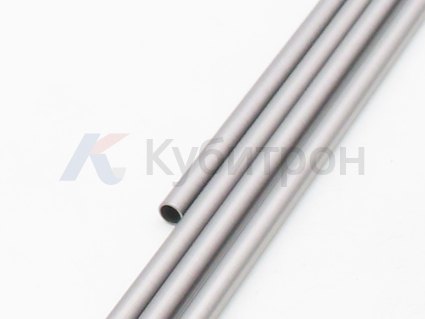
The Nb53Ti47 alloy is an alloy composed primarily of niobium (Nb) and titanium (Ti), consisting of 53% niobium and 47% titanium.
In the alloy, niobium and titanium form a solid-solution structure; interatomic interactions create a stable crystal lattice that combines certain characteristics of both elements.
Superconducting properties: Similar to the NbTi50 alloy, it exhibits excellent superconducting characteristics. It has a superconducting transition temperature of approximately 8–10 K, achieves zero electrical resistance and perfect diamagnetism at liquid helium temperatures, and maintains superconductivity in high magnetic fields, making it a practical low-temperature superconducting material.
Ease of processing: It possesses good ductility and can be drawn into fine filaments or twisted into multifilamentary composite structures; this overcomes the difficulty of shaping superconducting materials and facilitates the fabrication of complex superconducting coils.
Mechanical properties: It offers excellent mechanical strength, capable of withstanding high electromagnetic and thermal stresses, and maintains structural stability during the frequent charging/discharging and thermal cycling of superconducting magnets.