
| Thickness (mm) | Width | Length |
|---|---|---|
| 0.50–25.4 mm(Customizable upon request) | ≤610 mm(Standard Supply Scope) | In accordance with customer requirements |
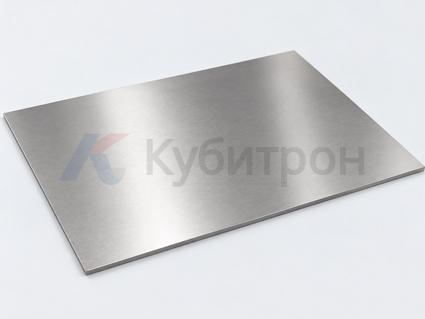
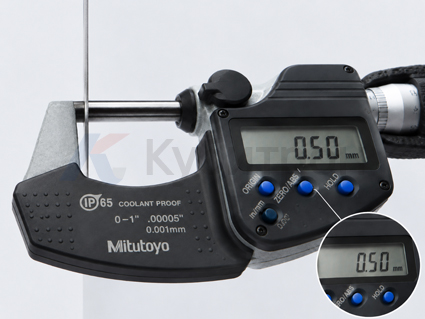
The C-103 alloy exhibits high strength at high temperatures, good ductility, machinability, and weldability, as well as low density and a high melting point, making it particularly suitable for use in the aerospace industry and high-temperature engineering.
C-103 niobium plates can be manufactured using vacuum melting, forging, hot and cold rolling, heat treatment, and precision machining. Various thicknesses, widths, lengths, surface finishes, and delivery conditions can be provided according to customer requirements. These products can be used in rocket engines, liquid rocket nozzles, combustion chambers, space propulsion systems, and other specialized structural components that must operate under high temperatures and extreme conditions.
C-103 plates exhibit excellent high-temperature properties; even at temperatures around 1093°C (2000°F), C-103 retains a certain yield strength and ductility. The melting point of the C-103 alloy is approximately 2,350 ± 50 °C, which is a key reason for its use in high-temperature environments, such as rocket nozzles. With a density of 8.85 g/cm³, the C-103 alloy combines high-temperature performance with a relatively low weight compared to many other high-temperature heat-resistant alloys, making it particularly well-suited for use in the aerospace industry.
The C-103 alloy offers excellent hot and cold working properties, as well as machinability and formability. Alloy C-103 can be welded using appropriate shielding atmospheres. It is therefore particularly suitable for aerospace components such as nozzles, combustion chambers, high-temperature structural parts, and complex welded assemblies.Customization is available in accordance with ASTM B654, AMS 7852, customer drawings, and technical specifications.
This is the most classic application of C-103. It is used in rocket nozzles and related aerospace propulsion systems.
C-103 sheet metal can be used for aerospace components that require: high-temperature resistance, low weight, and good machinability. For example: high-temperature engine components, propulsion system components, hot-section structural components, and heat-shield assemblies.
C-103 is suitable for use in environments with high exhaust gas temperatures. It can be used for: rocket exhaust systems, rocket engine components, exhaust nozzles, and combustion chamber components.
For example: rocket engines, satellite propulsion systems, space engines, deep-space probes, and high-temperature spacecraft components.
The C-103 can be used in certain studies of high-temperature propulsion systems.
It can also be used for: high-temperature experimental equipment, experiments with aerospace materials, high-temperature structural components, high-temperature vacuum equipment, and specialized scientific research devices.
| Thickness (mm) | Width | Length |
|---|---|---|
| 0.50–25.4 mm(Customizable upon request) | ≤610 mm(Standard Supply Scope) | In accordance with customer requirements |
| Material thickness | Test temperature | Tensile strength, Rm, min. | Yield strength, Rp0.2, min. | Elongation, A, min. |
|---|---|---|---|---|
| ≤ 1.3 mm | Room temperature | 385 MPa | 275 MPa | 20% |
| ≤ 1.3 mm | 1100 ± 15 °C | 145 MPa | 110 MPa | 20% |
| > 1.3 mm | Room temperature | 385 MPa | 275 MPa | 20% |
| > 1.3 mm | 1100 ± 15 °C | 145 MPa | 110 MPa | 20% |
| Thickness range | Thickness tolerance (reference) |
|---|---|
| 0.254–0.381 mm | ±0.0178 mm |
| 0.381–0.508 mm | ±0.0203 mm |
| 0.508–0.762 mm | ±0.0381 mm |
| 0.762–1.524 mm | ±0.0635 mm |
| 1.524–2.286 mm | ±0.1016 mm |
| 2.286–3.175 mm | ±0.1524 mm |
| 3.175–4.750 mm | ±0.254 mm |
| 4.750–6.350 mm | ±0.381 mm |